Winter in India is a season of transformation. The country that many associate with deserts, beaches and monsoon rains turns startlingly white in its northern and northeastern corners. Snow drapes pine forests, settles on temple roofs, silences mountain roads and redraws familiar landscapes in soft shades of silver and grey. For travellers willing to brave the cold, winter reveals an India that feels almost otherworldly.
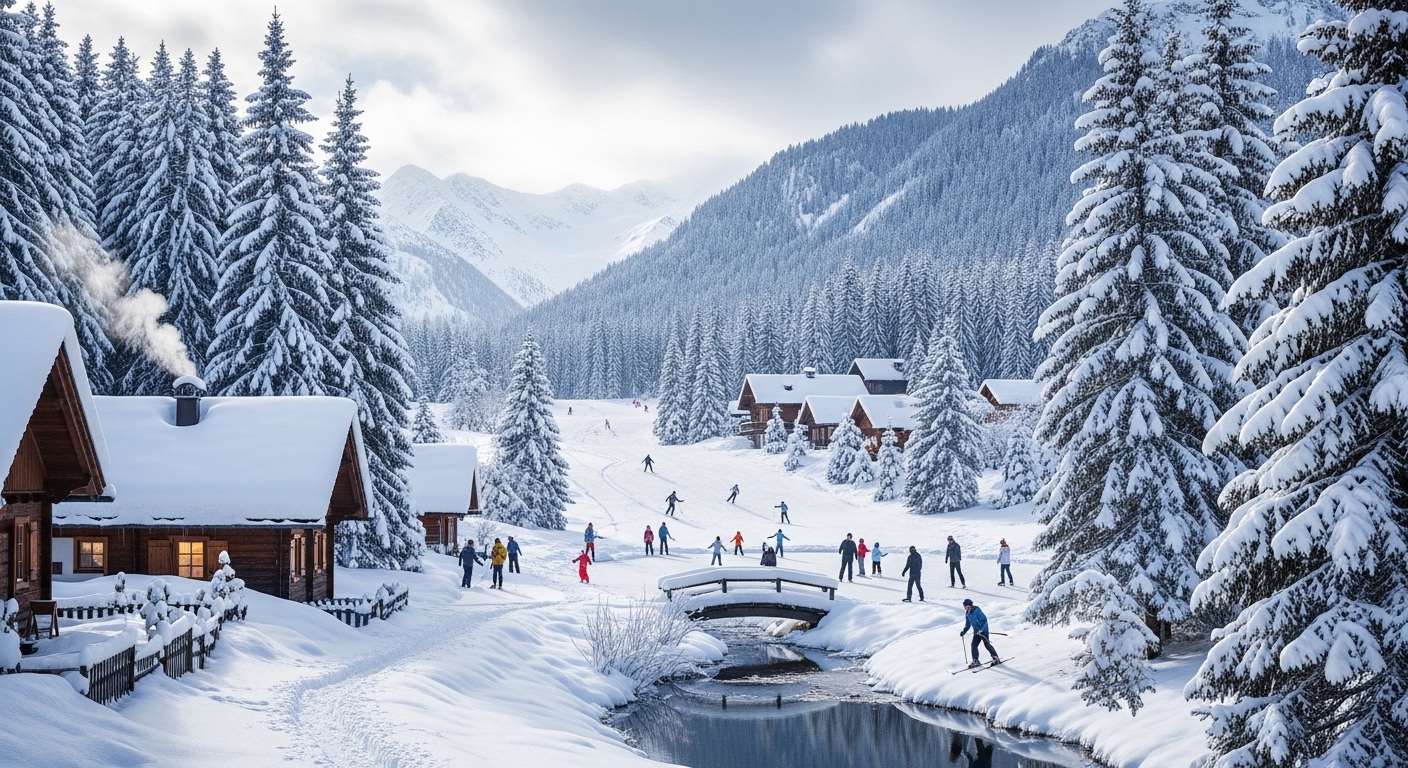
From the high Himalayas to lesser known hill towns, here are the snow destinations in India that truly come alive when temperatures fall and flakes begin to descend.
Gulmarg, Jammu and Kashmir
If there is one place that defines a winter wonderland in India, it is Gulmarg. Tucked into the Pir Panjal range, this meadow town transforms into a white amphitheatre between December and March.
The Gulmarg Gondola, one of the highest cable cars in the world, carries visitors above snow laden pines to slopes that attract skiers from across the globe. The second phase climbs to nearly 4,000 metres, where the air thins and the silence deepens.
But Gulmarg is not only for seasoned skiers. Families build snowmen near the golf course, honeymooners take slow walks through powdery trails, and photographers wait patiently for the sun to break through heavy clouds. On clear days, the snow glistens so brightly it seems to reflect the sky itself.
Winter here is immersive. Roads may close temporarily, temperatures drop well below freezing, and yet the reward is a landscape that feels untouched and cinematic.
Manali and Solang Valley, Himachal Pradesh
Further south in the Himalayas, Manali has long been a favourite for winter travellers. While the town remains lively through the year, snowfall lends it a quieter charm.
Solang Valley, just a short drive away, becomes a playground of snow activities. Skiing, snowboarding and snow scooters draw crowds, especially in January. Rohtang Pass, when open, offers dramatic vistas of white peaks and frozen streams.
Yet beyond the adventure lies a gentler side of winter in Manali. The old town, with its wooden houses and apple orchards, feels almost storybook under a blanket of snow. The Hidimba Devi Temple, surrounded by cedar trees, appears especially striking when flakes settle on its tiered roof.
Winter mornings begin slowly here. Steam rises from cups of tea, shopkeepers sweep snow from doorways, and the Beas River continues its steady course, partially edged with ice.
Auli, Uttarakhand
Auli is often described as India’s answer to alpine ski resorts. Perched above Joshimath in Uttarakhand, this small town offers panoramic views of peaks such as Nanda Devi.
In winter, Auli’s slopes are carefully groomed for skiing. Training camps and national competitions are held here, and cable cars link the base to higher viewpoints. Compared to more commercial destinations, Auli feels relatively serene.
The beauty of Auli lies in its vastness. Snow stretches across open meadows, broken only by dark tree lines and distant ridges. On a clear day, the contrast between white ground and deep blue sky is almost surreal.
For those who prefer contemplation over sport, simply standing at the edge of the slope, looking across the Himalayan range, is experience enough. The cold sharpens the senses. Every breath feels deliberate.
Tawang, Arunachal Pradesh
In the far northeast, Tawang offers a different kind of winter spectacle. Close to the border with China, this high-altitude town sees heavy snowfall that can render roads impassable for days.The Tawang Monastery, one of the largest in India, becomes particularly striking in winter. Prayer flags flutter against snowy backdrops, and the golden roof contrasts with the surrounding white terrain.
Travel to Tawang during winter requires planning and patience. Sela Pass, the gateway to the town, often closes temporarily due to snow. Yet those who make the journey are rewarded with landscapes that feel remote and pristine.
Frozen lakes, quiet monasteries and sparsely populated roads create a sense of isolation rarely found elsewhere. Winter here is not about convenience. It is about witnessing the raw power of nature in one of India’s least explored regions.
Shimla and Kufri, Himachal Pradesh
Once the summer capital of British India, Shimla wears snow like an old memory. Colonial era buildings along the Mall Road appear particularly evocative when dusted with white.
While heavy snowfall is not guaranteed every year, when it does arrive, the town takes on a festive mood. Children race down slopes on makeshift sledges, and visitors crowd viewpoints to capture the first flakes of the season.
Kufri, a short drive away, typically receives more consistent snowfall. Its gentle slopes make it popular with families seeking a first snow experience. Horse rides through snowy trails and panoramic views of surrounding hills add to the appeal.
Winter in Shimla is as much about atmosphere as it is about snow. Warm bakeries, old theatres and evening walks through misty streets create a nostalgia that lingers long after the season ends.
Lachung and Yumthang Valley, Sikkim
In North Sikkim, Lachung serves as the base for exploring Yumthang Valley, often called the Valley of Flowers in spring. In winter, however, the valley becomes a vast expanse of white.
Snowfall here can be heavy, and subzero temperatures are common. Rivers freeze at the edges, and wooden houses in Lachung appear framed by icicles.
Unlike busier hill stations, Lachung remains relatively quiet in winter. The stillness is profound. Prayer wheels turn slowly in the cold breeze, and distant peaks fade into pale skies.
For travellers seeking a snow experience without large crowds, North Sikkim offers both beauty and solitude. It also provides a glimpse into the resilience of mountain communities who continue daily life despite harsh weather.
Dalhousie and Khajjiar, Himachal Pradesh
Dalhousie, with its colonial era churches and pine covered hills, feels almost European when snow falls. The town’s old-world charm deepens under winter light.
Nearby Khajjiar, often referred to as the mini-Switzerland of India, transforms into a smooth white meadow. The lake at its centre sometimes partially freezes, adding to the surreal quality of the landscape.
Snowfall here is not always as heavy as in higher Himalayan towns, but when it arrives, it creates postcard scenes. Long walks through forest paths, the crunch of snow underfoot and the occasional sighting of wildlife make winter visits memorable.
Planning a Winter Snow Trip in India
While the allure of snow is undeniable, winter travel in India’s mountain regions demands preparation. Weather conditions can change quickly. Road closures due to snowfall are common, especially in remote areas.
Warm clothing is essential. Thermal layers, waterproof jackets, gloves and sturdy boots can make the difference between comfort and discomfort. It is also wise to check local forecasts and consult with hotels about accessibility.
Altitude is another factor. Destinations like Gulmarg, Auli and Tawang sit at considerable heights. Travellers should allow time for acclimatisation and avoid overexertion on the first day.
Despite these challenges, winter trips often reward travellers with fewer crowds and more intimate experiences. Hotels may offer off season discounts outside peak holiday weeks, making it possible to enjoy scenic stays at reasonable prices.
The Quiet Allure of Snow
Snow changes sound. It softens footsteps, muffles traffic and slows conversation. In India’s mountain towns, this transformation is almost poetic. Familiar landscapes become unfamiliar. Everyday routines adjust to the rhythm of cold mornings and early sunsets.
For some, snow is about adventure. For others, it is about wonder. Watching the first flakes fall in Gulmarg, walking through silent forests in Auli, or seeing prayer flags against white peaks in Tawang can feel deeply personal.
Winter in India is not uniform. It varies from region to region, from heavy Himalayan storms to light dustings in lower hills. But in each of these destinations, snow brings with it a sense of pause.
In a country known for its colour and chaos, winter offers a different palette. White, silver and pale blue take centre stage. The result is not just a visual spectacle but a reminder that India, vast and varied, contains within it seasons that surprise and transform.