India’s cities are layered like old manuscripts. On the surface, they throb with traffic, commerce and ambition. But step into a narrow lane with a local guide, pause at a weathered doorway or trace your fingers over fading frescoes, and another city begins to speak. Heritage walks have emerged as one of the most intimate ways to experience urban India. They are not just strolls through old neighbourhoods. They are conversations with memory.
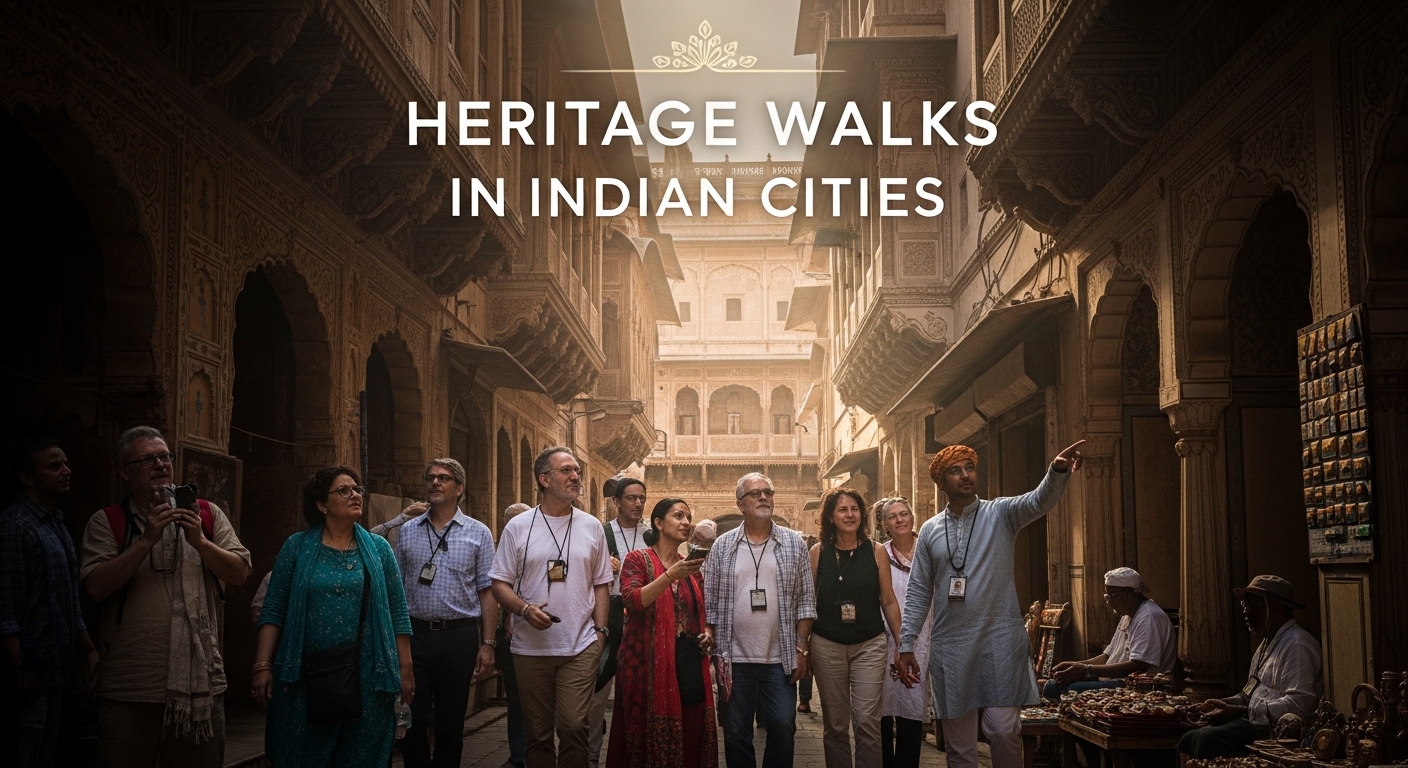
Across the country, from the Mughal lanes of the north to the temple towns of the south, curated walks are uncovering stories that rarely make it to textbooks.
Old Delhi, Delhi
In the heart of the capital, beyond the broad avenues of Lutyens’ Delhi, lies the dense and pulsating quarter of Shahjahanabad. A heritage walk here often begins near the towering walls of the Red Fort and moves into the arteries of Chandni Chowk.
Under the shadow of the grand Jama Masjid, guides recount how Emperor Shah Jahan envisioned this city as a symbol of imperial power. But the real revelations lie in the gullies. There are havelis with crumbling courtyards, Jain temples tucked behind spice markets and forgotten stepwells hidden in plain sight.
One moment you are tasting a centuries old sweet recipe in a shop that survived Partition. The next, you are standing before Ghalib ki Haveli, learning about the wit and melancholy of the poet who chronicled a fading empire. These walks reveal how Old Delhi has absorbed trauma and change yet retains its layered identity.
The Pols of Ahmedabad
Ahmedabad’s old city, recognised as a UNESCO World Heritage City, is best explored on foot. Its distinctive residential clusters, known as pols, are a maze of carved wooden facades, secret bird feeders and community squares.
A heritage walk through Manek Chowk at dawn offers a quiet contrast to its bustling night market persona. Guides explain how these tightly knit neighbourhoods were designed for security during periods of conflict. Ornate havelis display delicate craftsmanship that reflects a blend of Hindu, Jain and Islamic influences.
Stopping at the Sidi Saiyyed Mosque, visitors often marvel at the famed stone lattice windows. The intricate tree of life motif has become an emblem of the city. Yet beyond the architectural brilliance, the stories are of merchants who financed trade across continents and communities that coexisted within shared walls.
By the Ghats of Varanasi
Few cities in the world match the spiritual density of Varanasi. A heritage walk along the ghats of the Ganges at sunrise is less about monuments and more about rituals.
The steps of Dashashwamedh Ghat come alive with priests performing morning prayers, boatmen preparing for the day and pilgrims gathering water in brass vessels. Guides narrate legends of how the city is believed to have been founded by Lord Shiva and how scholars, musicians and silk weavers shaped its identity.
Beyond the riverfront, narrow alleys lead to ancient temples and to the historic Kashi Vishwanath Temple. Each turn reveals a shrine or a centuries old home where traditions continue uninterrupted. The walk becomes a meditation on continuity in a city that measures time differently.
The Fortified Grandeur of Jaipur
Jaipur’s pink facades are instantly recognisable, but a guided heritage walk uncovers subtler narratives. Within the walled city, markets were carefully zoned according to trade. Johari Bazaar glittered with jewellers, while Tripolia catered to ironmongers.
Standing before the ornate facade of Hawa Mahal, guides often describe how royal women once observed street processions through its latticed windows. A short walk away, City Palace reveals courtyards where diplomacy and ceremony intertwined.
Yet the hidden stories belong to artisans who still practise block printing and lac bangle making in family workshops. Heritage walks here highlight living traditions rather than frozen relics.
Colonial Echoes in Kolkata
Kolkata’s heritage walks traverse grand colonial avenues and crumbling mansions that whisper of the British Raj. Dalhousie Square, now BBD Bagh, is ringed by imposing buildings that once housed imperial power.
At the stately Victoria Memorial, guides recount how the monument was conceived as a tribute to Queen Victoria. Yet the city’s soul lies equally in North Kolkata’s old neighbourhoods. Marble floored mansions, known as rajbaris, reveal the wealth of Bengali zamindars who embraced Western education while nurturing a cultural renaissance.
Walking through College Street, one hears stories of intellectual debates that shaped modern India. The city’s trams, still clattering along certain routes, become moving heritage exhibits.
Temple Trails in Madurai
In Tamil Nadu, Madurai’s heritage is anchored by the monumental Meenakshi Amman Temple. A walk around the temple complex is a lesson in Dravidian architecture. Towering gopurams are covered in vividly painted deities and mythical creatures.
But the stories extend into the surrounding streets. Flower sellers string jasmine garlands as they have for generations. Bronze artisans continue to cast idols using ancient techniques. Guides narrate tales of the Nayak rulers who expanded the temple and turned Madurai into a thriving cultural centre.
A heritage walk here is sensory. The fragrance of camphor, the rhythm of temple drums and the vibrant saris of pilgrims create an atmosphere that feels timeless.
Portuguese Footprints in Goa
In Old Goa, the remains of a once flourishing colonial capital stand in quiet dignity. Heritage walks often explore churches and convents that reflect Portuguese influence.
The baroque splendour of the Basilica of Bom Jesus draws visitors from around the world. Guides speak of missionaries, maritime trade routes and the mingling of European and Indian traditions.
In the Latin Quarter of Panaji, brightly painted houses with oyster shell windows line narrow lanes. Stories of Indo Portuguese families, music and cuisine surface as one walks past bakeries selling fresh pão. The walk becomes a reminder that heritage is also about cultural fusion.
Islamic Heritage in Hyderabad
Hyderabad’s old city radiates from the iconic Charminar. Built in 1591, it stands as a testament to the Qutb Shahi dynasty.
A heritage walk here often winds through Laad Bazaar, famed for its bangles, before reaching the grand Chowmahalla Palace. Guides recount the opulence of the Nizams and their role in shaping modern Hyderabad.
But there are also quieter stories of Irani cafes where poets once gathered and of craftsmen who still embroider khada dupattas for traditional weddings. These narratives ground the city’s royal history in everyday life.
Why Heritage Walks Matter
In an era of rapid urbanisation, heritage walks offer more than nostalgia. They create economic opportunities for local guides, artisans and small businesses. They foster pride among residents who see their neighbourhoods appreciated rather than overlooked.
For travellers, these walks challenge the idea of sightseeing as a checklist. Instead of rushing between monuments, participants linger. They ask questions. They notice details.
Each city reveals a different facet of India’s complex identity. In Delhi, it is resilience. In Ahmedabad, communal harmony. In Varanasi, spiritual continuity. In Jaipur, artistic legacy. In Kolkata, intellectual ferment. In Madurai, devotional intensity. In Goa, cultural blending. In Hyderabad, regal grandeur.
Heritage walks remind us that cities are living organisms. Their past is not sealed behind museum glass. It survives in recipes, in rituals, in the cadence of local dialects and in the shadows cast by ancient walls at sunset.
To walk through these streets is to realise that history is not distant. It is underfoot, waiting to be rediscovered, one story at a time.