Summer in India can be relentless. By May, the plains shimmer in rising heat and city roads feel like griddles under the afternoon sun. Yet this is also the season when the mountains breathe easy, when coastal winds turn generous, and when highland towns come alive with color and visitors. Across the country, there are places where summer feels less like a trial and more like an invitation.
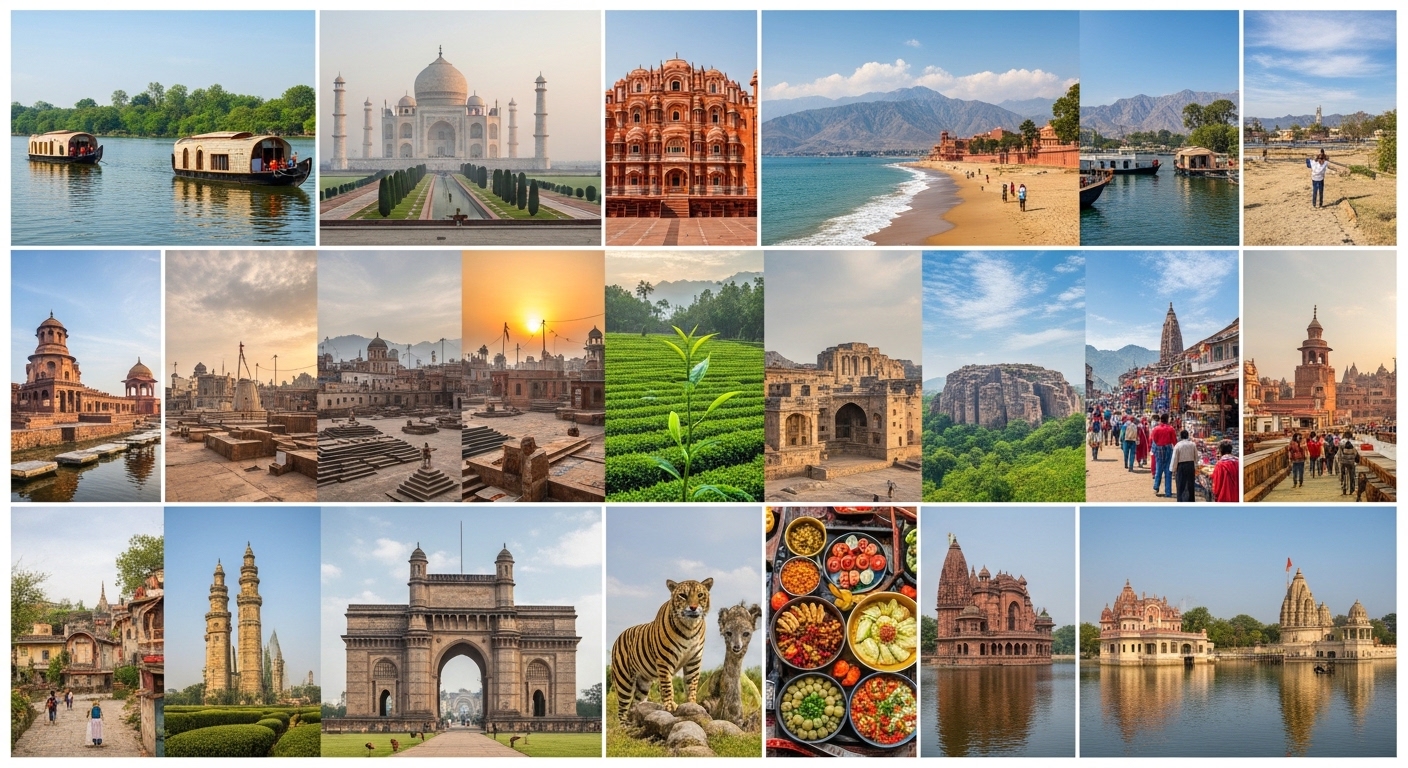
Here are 15 destinations that offer relief, character, and stories worth telling.
1. Manali
In the Kullu Valley, Manali sits like a painting framed by snow dusted peaks and tall deodar trees. The Beas River rushes past with restless energy, drawing adventure seekers for rafting and riverside camping. Solang Valley fills with paragliders floating against blue skies, while Rohtang Pass, when open, offers a dramatic gateway to stark mountain landscapes. Yet Manali is not all thrill. Old Manali moves at a gentler pace, with wooden houses, apple orchards, and quiet cafés overlooking the hills. It remains one of north India’s most dependable summer sanctuaries.
2. Shimla
Shimla carries its colonial inheritance lightly but visibly. The Ridge opens out to mountain views that seem endless, and Christ Church watches over the town as it has for more than a century. Families gather along Mall Road in the evening, children clutching balloons and ice cream while the air cools quickly after sunset. The narrow-gauge Kalka Shimla Railway, now a UNESCO recognized marvel, climbs through tunnels and pine forests, turning the journey into a memory in itself. Shimla offers comfort, familiarity, and just enough mountain drama.
3. Darjeeling
Darjeeling wakes early. Before dawn, visitors drive up to Tiger Hill to watch the first light strike Kanchenjunga, turning the snow peaks into molten gold. By mid-morning, the town hums with tea sellers and the whistle of the Darjeeling Himalayan Railway. Tea gardens roll across slopes like a green quilt stitched into the hills. Conversations drift easily here, often over cups of the region’s famous brew. Darjeeling blends scenery with heritage, and its cool weather offers a graceful escape from eastern India’s humidity.
4. Ooty
Set in the Nilgiri Hills, Ooty feels like a southern answer to the Himalayan retreats. The Botanical Gardens burst into bloom during summer, drawing photographers and families alike. Ooty Lake fills with paddle boats, and the surrounding eucalyptus groves lend the air a sharp freshness. The Nilgiri Mountain Railway winds its way through tunnels and tea estates, revealing landscapes that appear almost theatrical in their beauty. For travelers from Tamil Nadu and neighboring states, Ooty remains a cherished seasonal tradition.
5. Munnar
Munnar’s slopes are defined by tea. Plantation workers move through the fields in rhythmic lines, their baskets filling steadily under a mild sun. The hills ripple outward in endless shades of green, occasionally broken by waterfalls that spill down rocky faces. Eravikulam National Park protects rare wildlife and offers sweeping views of the Western Ghats. Munnar is quiet without being dull, scenic without feeling staged. It is the kind of place where mornings begin with mist and evenings close with silence.
6. Leh
Summer unlocks Ladakh. Mountain passes reopen, revealing a stark, high-altitude desert shaped by wind and time. In Leh, whitewashed monasteries cling to cliffs, prayer flags fluttering in thin mountain air. Pangong Lake changes color with the sun, shifting from deep blue to pale turquoise. The roads themselves are an adventure, cutting through valleys that appear almost lunar. Leh demands a slower pace as visitors acclimatize, but the reward is a landscape unlike any other in India.
7. Srinagar
Srinagar in summer is gentle and fragrant. Dal Lake reflects wooden houseboats and the quiet rhythm of shikaras gliding across its surface. The Mughal Gardens, especially Shalimar Bagh and Nishat Bagh, bloom with layered terraces and flowing fountains. Snow lingers on distant peaks while the city itself enjoys mild days and cool evenings. Srinagar is not only scenic but deeply cultural, shaped by craft traditions and a cuisine that draws from centuries of history.
8. Nainital
Clustered around a pear-shaped lake, Nainital offers a picture of calm. Boating on Naini Lake is almost compulsory, with oars dipping steadily into green water. The town rises around the lake in a series of slopes dotted with hotels, schools, and viewpoints. Snow Viewpoint offers glimpses of Himalayan ranges on clear days. Nainital’s charm lies in its simplicity. It is accessible, friendly, and reliably cooler than the plains below.
9. Mussoorie
Mussoorie has long been called the Queen of the Hills. Camel’s Back Road provides a peaceful walking stretch with panoramic views, especially at sunset. Kempty Falls draws crowds eager for a refreshing dip. The town’s colonial architecture and boarding schools give it a distinct character. Writers and artists have often found inspiration here, drawn by both its beauty and its quiet corners.
10. Coorg
Coorg unfolds in layers of coffee estates and forested hills. Early mornings carry the scent of roasted beans, and mist drifts low over the plantations. Abbey Falls crashes through rocky terrain, and Raja’s Seat offers views that stretch across valleys. The Kodava culture, with its unique customs and cuisine, adds depth to the landscape. Coorg is less about sightseeing lists and more about soaking in atmosphere.
11. Shillong
Shillong stands apart for its music, rainfall, and rolling hills. Even in summer, the climate remains cool compared to much of the country. Nearby attractions such as Elephant Falls and Umiam Lake showcase the region’s natural wealth. Cafés echo with live music, reflecting a vibrant local scene. Shillong feels contemporary yet rooted, offering both scenery and culture.
12. Mount Abu
In the desert state of Rajasthan, Mount Abu offers welcome relief. Nakki Lake becomes the center of evening activity, with families strolling along its banks. The Dilwara Temples stand as masterpieces of marble craftsmanship; their carvings intricate and astonishing. The town’s elevation keeps temperatures manageable, making it a favored retreat for those escaping the heat of cities like Jaipur and Jodhpur.
13. Gangtok
Gangtok combines order, cleanliness, and sweeping Himalayan views. MG Marg buzzes with life but remains pedestrian friendly. Rumtek Monastery reflects the region’s strong Buddhist heritage, while Tsomgo Lake lies serene amid high mountains. Summer is one of the best times to visit, with clear skies revealing peaks that remain hidden during monsoon months.
14. Kodaikanal
Kodaikanal has a quieter reputation than Ooty, and that works in its favor. The star shaped Kodai Lake invites cyclists and walkers to circle its edge. Coaker’s Walk offers dramatic valley views that stretch endlessly on clear afternoons. Bryant Park bursts into color during the season. Mist often drapes the cliffs, giving the town a dreamlike quality that lingers long after the trip ends.
15. Mahabaleshwar
High in the Western Ghats, Mahabaleshwar is known for its viewpoints and strawberries. Arthur’s Seat provides sweeping panoramas of deep valleys, while Wilson Point draws early risers for sunrise. The climate remains pleasant even in peak summer, making it a favorite weekend retreat for residents of Mumbai and Pune. Markets brim with fresh produce and homemade preserves, adding a local flavor to the experience.
Where Summer Feels Different
India’s summer story is not defined only by heat. It is also about altitude, breeze, and the relief found in shaded valleys and lakeside towns. From the stark grandeur of Leh to the tea scented calm of Munnar, each destination reveals a different face of the season. The choice depends on what you seek, adventure, culture, or simply cooler air. But wherever you go, summer in India proves that escape is always within reach.