India’s spiritual geography is as vast as its physical landscape. Across rivers, deserts, mountains and coastlines stand cities that have drawn seekers for centuries. These sacred centres are not merely tourist destinations. They are living traditions where ritual, faith and daily life blend seamlessly. Pilgrims arrive with prayers, doubts, gratitude or quiet curiosity, and often leave with a deeper sense of connection.
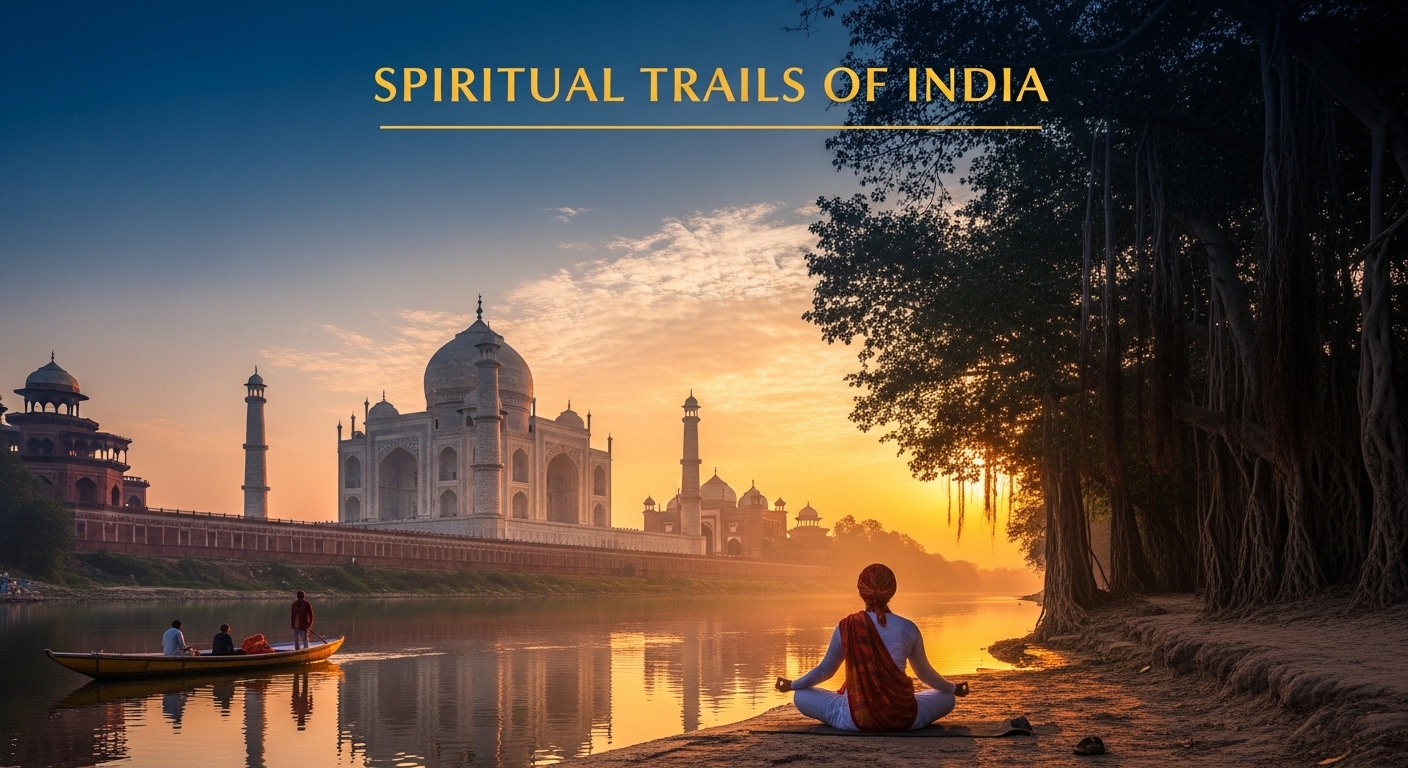
From the banks of the Ganga to temple towns in the South, here is a journey through some of India’s most revered spiritual cities every devotee should consider visiting.
Varanasi, Uttar Pradesh
Few places embody the spirit of India as profoundly as Varanasi. Considered one of the oldest continuously inhabited cities in the world, it rests along the sacred Ganga River. For millions of Hindus, a visit to Varanasi is not simply travel but a sacred duty.
At dawn, the ghats come alive with chants and temple bells. Devotees gather to bathe in the river, believing its waters cleanse sins and grant liberation. The evening Ganga Aarti at Dashashwamedh Ghat is a spectacle of fire, sound and devotion. Priests move lamps in synchronised rhythm while conch shells echo across the water.
Haridwar, Uttarakhand
Narrow lanes lead to the Kashi Vishwanath Temple, dedicated to Lord Shiva. The city’s spiritual energy is intense, layered with centuries of philosophy, poetry and ritual.
Further upstream along the Ganga lies Haridwar, literally meaning gateway to God. It is one of the seven holiest cities in Hindu tradition.
Pilgrims descend the steps of Har Ki Pauri ghat at sunset to witness the river ceremony. Lamps float gently on the water as chants fill the air. Haridwar also serves as a starting point for the Char Dham Yatra, making it a major spiritual crossroads.The city’s atmosphere is simpler and quieter than many urban centres, offering space for reflection and prayer.
Rishikesh, Uttarakhand
Often called the yoga capital of the world, Rishikesh balances spirituality with natural beauty. Ashrams line the riverbanks, welcoming seekers from across the globe.
Beyond its global yoga identity, Rishikesh holds deep mythological significance. It is believed that sages performed penance here, and temples such as Neelkanth Mahadev attract devotees year round.
Evenings along the Ganga are serene. Compared to Haridwar, the rituals here are more intimate, drawing those who seek spiritual practice alongside meditation and introspection.
Ayodhya, Uttar Pradesh
On the banks of the Sarayu River stands Ayodhya, revered as the birthplace of Lord Ram. For devotees of the Ramayana, Ayodhya holds immense emotional and religious significance.Temples, ghats and newly developed pilgrimage corridors have transformed the city into a major spiritual destination. Ram Navami draws large gatherings, but even on quieter days, the town resonates with devotion.
Ayodhya’s importance lies not only in its structures but in its place within the epic narrative that shapes Hindu thought and ethics.
Mathura and Vrindavan, Uttar Pradesh
The twin towns of Mathura and Vrindavan are central to the life of Lord Krishna. Mathura is regarded as his birthplace, while Vrindavan is associated with his childhood and divine play.Temples such as Banke Bihari and ISKCON draw thousands daily. Bhajans fill the streets, especially during Janmashtami and Holi when celebrations reach extraordinary scale.
In Vrindavan, devotion often takes the form of music and dance, reflecting Krishna’s playful spirit. The atmosphere is joyful, colourful and deeply emotional.
Amritsar, Punjab
The spiritual heart of Sikhism beats in Amritsar, home to the Golden Temple, officially known as Harmandir Sahib. The gleaming shrine, surrounded by a sacred pool, stands as a symbol of equality and service.
Visitors cover their heads and walk barefoot along cool marble pathways before entering the sanctum. The continuous recitation of the Guru Granth Sahib creates a deeply calming atmosphere.
Equally inspiring is the langar, the community kitchen that serves free meals to thousands every day, regardless of faith or background. Service here is not ceremonial but a daily practice.
Bodh Gaya, Bihar
For followers of Buddhism, Bodh Gaya marks the place where Siddhartha Gautama attained enlightenment under the Bodhi tree.
The Mahabodhi Temple complex, a UNESCO World Heritage Site, attracts monks and pilgrims from across Asia. Prayer flags flutter gently as devotees meditate in silence.The energy of Bodh Gaya is contemplative rather than ritualistic. It invites inward reflection, echoing the Buddha’s teachings of compassion and mindfulness.
Puri, Odisha
On India’s eastern coast lies Puri, one of the Char Dham pilgrimage sites. The Jagannath Temple dominates the skyline and the city’s rhythm.The annual Rath Yatra, where deities are carried on grand chariots through the streets, draws millions. Yet beyond the festival, Puri’s spiritual life continues daily through temple rituals and sea facing prayers.
The sound of waves blending with temple bells gives Puri a unique devotional ambience.
Tirupati, Andhra Pradesh
Among the wealthiest and most visited temples in the world, the Tirumala Venkateswara Temple in Tirupati welcomes thousands of pilgrims each day.
Devotees often wait for hours for a brief darshan of Lord Venkateswara. The experience is intense yet deeply fulfilling for believers.The hilltop setting adds to the sense of ascent, both physical and spiritual.
Madurai, Tamil Nadu
The temple city of Madurai centres around the Meenakshi Amman Temple, a masterpiece of Dravidian architecture.Towering gopurams adorned with vibrant sculptures rise above bustling markets. Rituals here are elaborate, with daily ceremonies that have continued for centuries.
Madurai demonstrates how faith shapes urban life. Markets, homes and streets all orbit the temple complex, reflecting a continuity of devotion.
Dwarka, Gujarat
On the western edge of the country stands Dwarka, associated with Lord Krishna’s kingdom. The Dwarkadhish Temple overlooks the Arabian Sea, symbolising both divinity and maritime history.
Pilgrims often combine Dwarka with visits to other sacred sites in Gujarat. Sunset along the coast adds a quiet beauty to this ancient city.Kanchipuram, Tamil NaduOften called the city of a thousand temples, Kanchipuram is revered for its Shaivite and Vaishnavite shrines.The Ekambareswarar and Varadaraja Perumal temples draw devotees from across South India. Beyond spirituality, Kanchipuram is known for its silk weaving tradition, blending sacred craft with commerce.
The Journey Within
What unites these cities is not just theology but atmosphere. Each offers a distinct expression of faith, shaped by region, language and history. In Varanasi, devotion is intense and ancient. In Amritsar, it is expressed through service and equality. In Bodh Gaya, it flows through silence.
Pilgrimage in India is rarely comfortable in a conventional sense. It may involve long queues, crowded streets or simple accommodations. Yet devotees often describe a sense of fulfilment that outweighs inconvenience.
Spiritual trails are as much about inner travel as outer movement. They invite reflection on belief, humility and community. In walking these ancient paths, pilgrims participate in traditions that have endured for centuries.
For those seeking meaning beyond monuments, India’s sacred cities offer journeys that linger long after the return home.