There are moments in travel when a landscape unsettles your sense of geography. A timber framed house appears against a backdrop of snow peaks. A church spire rises above rolling meadows. Cobblestone paths wind past flower boxes bursting with geraniums. You pause and wonder if you have wandered into a postcard from Switzerland or Austria. Then someone greets you in Hindi, Tamil or a mountain dialect, and you are gently reminded that you are still in India.
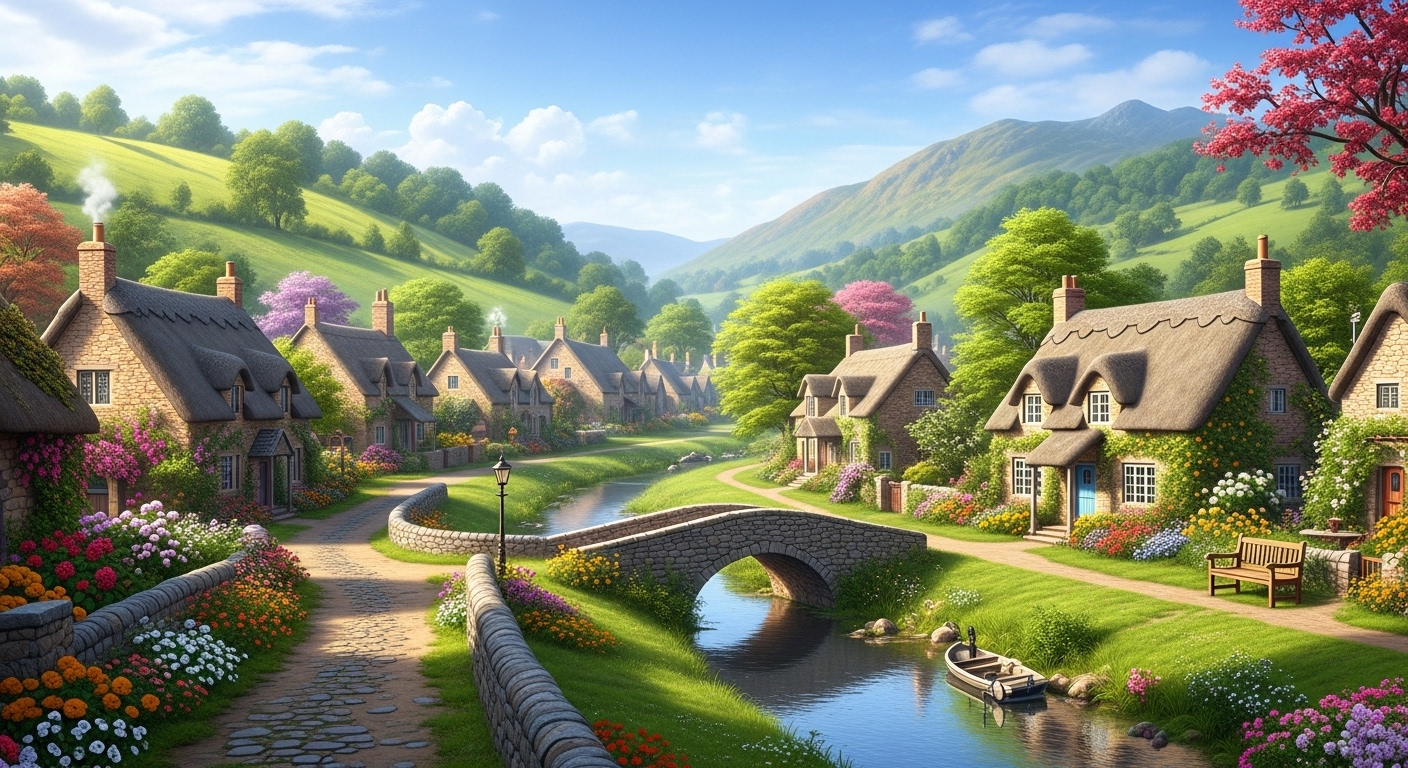
Across the country, a handful of villages carry an uncanny resemblance to European countryside settings. Some mirror Alpine charm through architecture and climate. Others evoke Mediterranean calm with whitewashed houses and sunlit hills. Yet each remains deeply rooted in Indian soil.
Khajjiar, Khajjiar
Often called the “Mini Switzerland of India,” Khajjiar sits in the Chamba district of Himachal Pradesh. The comparison is not a marketing gimmick. The village unfolds around a lush meadow ringed by dense deodar forests, with snowcapped peaks framing the horizon.
At the centre lies a small lake that reflects drifting clouds and grazing horses. Wooden cottages with sloping roofs dot the landscape, lending it an Alpine mood. The nearby Khajji Nag Temple, dating back to the 12th century, adds a layer of antiquity. Its intricate wood carvings stand as a reminder that while the scenery may feel European, the heritage is unmistakably Indian.
During summer, the grass glows emerald and families picnic beneath tall trees. In winter, snowfall transforms the meadow into a quiet white canvas. The silence here carries a purity that feels far removed from urban India.
Chopta, Chopta
High in Uttarakhand’s Garhwal region lies Chopta, a small hamlet that seems sculpted for solitude. Rolling meadows stretch toward distant Himalayan peaks. Pine forests sway gently in crisp mountain air.
Chopta’s resemblance to European countryside villages lies in its pastoral calm. Wooden guesthouses with balconies overlook slopes that change colour with the seasons. In spring, rhododendrons bloom in fiery hues, reminiscent of Alpine valleys in Austria.
The trek to Tungnath Temple, one of the highest Shiva temples in the world, begins here. As hikers ascend, they encounter panoramic views that rival those of Switzerland’s mountain trails. Yet along the path, local shepherds guide flocks of sheep, grounding the experience in Himalayan tradition.
Ziro, Ziro
In Arunachal Pradesh, the Ziro Valley unfolds like a European pastoral painting. Rice fields spread in geometric patterns across flat terrain, surrounded by pine covered hills.
The Apatani tribe, indigenous to this region, has cultivated these lands for centuries using sustainable farming methods. Their bamboo houses rise on stilts, blending into the landscape. Early mornings here bring mist that settles gently over the fields, creating an atmosphere reminiscent of rural France.
Ziro’s charm lies in its rhythm. Farmers move quietly through paddies, children cycle along narrow roads and church bells occasionally punctuate the air. The village has gained international attention through the Ziro Music Festival, which draws artists and visitors from around the world. For a few days each year, global music echoes across a valley that otherwise thrives on simplicity.
Mawlynnong, Mawlynnong
Tucked away in Meghalaya’s East Khasi Hills, Mawlynnong has earned recognition as one of Asia’s cleanest villages. Its neat pathways, bamboo dustbins and flower lined lanes create an orderly aesthetic that could easily belong to a small European hamlet.
Homes are often painted in soft colours, with gardens carefully tended. The community’s collective effort to maintain cleanliness has shaped both its reputation and its identity. Walking through Mawlynnong feels like stepping into a place where civic pride is visible in every corner.
Nearby, the living root bridges woven from rubber trees demonstrate indigenous ingenuity. These organic structures, grown rather than built, add a fairy tale element to the landscape. The village proves that beauty can emerge from discipline and cooperation.
Kalpa, Kalpa
Perched in Himachal Pradesh’s Kinnaur district, Kalpa offers sweeping views of the Kinner Kailash range. Apple orchards surround traditional wooden houses, and narrow lanes wind past monasteries and temples.
In autumn, the orchards turn golden and red, evoking images of rural Italy or southern Germany during harvest season. The crisp mountain air carries the scent of pine and ripe fruit. Snow in winter softens the outlines of rooftops, making the village resemble a quiet Alpine settlement.
Kalpa’s architecture blends Hindu and Buddhist influences, reflecting centuries of cultural exchange along ancient trade routes. While the scenery may recall Europe, the spiritual atmosphere remains distinctly Himalayan.
Lambasingi, Lambasingi
In the Eastern Ghats of Andhra Pradesh lies Lambasingi, often referred to as the “Kashmir of Andhra Pradesh.” At first glance, its mist covered hills and cool climate feel unusual for southern India.
Early mornings here reveal fog drifting across coffee plantations and pepper vines. The rolling terrain and chilly winters have drawn comparisons to European highlands. During certain months, temperatures dip low enough for frost to appear, a rarity in this part of the country.
The village remains quiet, with tribal communities continuing traditional lifestyles. Lambasingi’s understated charm lies in its ability to surprise travellers who expect tropical heat and instead find a cool, contemplative retreat.
Malana, Malana
Hidden in the Parvati Valley of Himachal Pradesh, Malana feels like a world unto itself. Wooden houses with slate roofs cluster along steep slopes. The village’s isolation and unique customs have long fascinated visitors.
Some compare its setting to remote mountain villages in Eastern Europe. Snow dusts the peaks in winter, and the Beas River carves dramatic valleys nearby. Yet Malana’s governance system, which locals claim dates back centuries, reflects a fiercely independent spirit.
Walking through its narrow lanes, one senses a community protective of its heritage. The scenery may resemble distant continents, but the stories are deeply local.
Yercaud, Yercaud
In Tamil Nadu’s Shevaroy Hills, Yercaud offers a gentler kind of European charm. Coffee plantations, citrus groves and colonial era bungalows dot the slopes.
The cool climate and winding roads recall small towns in southern Europe. At sunrise, mist rises from the Yercaud Lake, casting a soft glow over the water. Flower gardens bloom with vibrant colours, adding to the village’s pastoral appeal.
Unlike busier hill stations, Yercaud retains a sense of calm. Its slower pace allows visitors to absorb the landscape rather than rush through it.
Beyond Appearances
What unites these villages is not imitation but atmosphere. Their resemblance to Europe lies in climate, terrain or architectural echoes shaped by history. Yet each remains anchored in local culture, language and belief systems.
In Khajjiar and Kalpa, Himalayan traditions define daily life. In Ziro and Mawlynnong, indigenous communities maintain ecological balance. In Lambasingi and Yercaud, southern landscapes defy stereotypes.
For Indian travellers, these villages offer a chance to experience Alpine like serenity without crossing continents. For international visitors, they reveal the geographic diversity of a country often reduced to clichés.
Standing in a meadow in Khajjiar or watching mist roll over Ziro’s fields, it is easy to draw parallels with Europe. But linger a little longer. Listen to temple bells, church choirs or the chatter of local markets. Taste regional cuisine prepared with mountain herbs or forest spices. The illusion fades, replaced by a deeper appreciation.
These villages do not need to be Europe to be beautiful. They simply need to be themselves.