On any given day in India, millions are on the move. Some stand at crowded railway platforms waiting for the familiar rumble of an arriving express. Others queue at airport security, boarding passes in hand, racing against departure time. For budget travelers, the question is not simply how to get from one city to another. It is about value, comfort, time, and the overall experience.
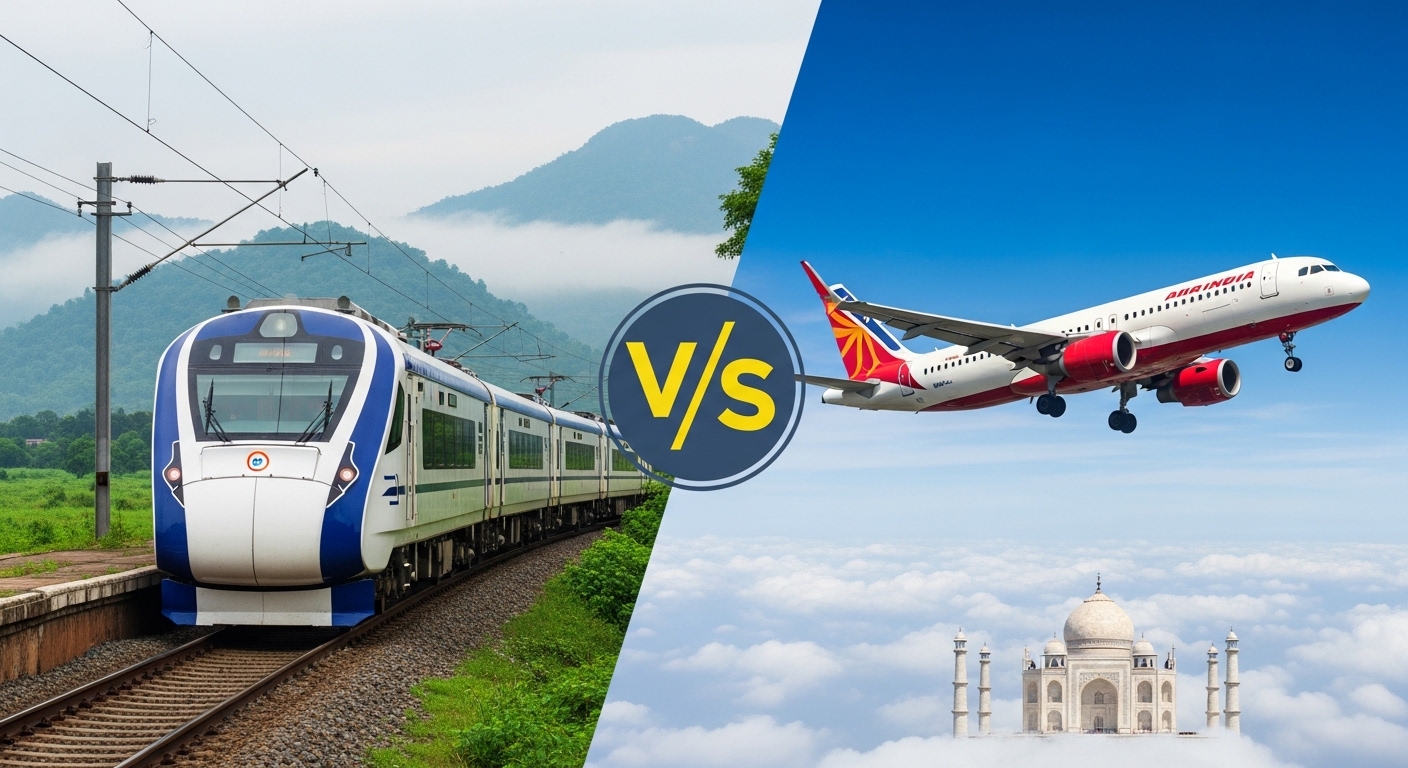
For decades, trains have been the backbone of domestic travel. In recent years, however, low cost airlines have transformed flying from a luxury into an accessible option for many middle class Indians. So which mode truly serves the budget traveler better: the train or the flight? The answer lies in a careful look at cost, time, accessibility, comfort, and the hidden factors that influence the real price of travel.
The Cost Factor: Counting Every Rupee
For most budget travelers, the first concern is simple. How much will it cost?
Indian Railways, operated by Indian Railways, remains one of the most affordable ways to travel long distances. With multiple classes ranging from Sleeper to Third AC and Second AC, passengers can choose according to their budget. A long distance journey between cities such as Delhi and Mumbai in Sleeper class can cost a fraction of what a flight might charge. Even air conditioned classes are often reasonably priced if tickets are booked in advance.
Rail fares are generally stable. Prices do not fluctuate dramatically from day to day. If you book early, you can secure a confirmed ticket at a predictable rate. For students, families, and backpackers, this reliability offers peace of mind.
Flights, on the other hand, operate on dynamic pricing. Airlines such as IndiGo and SpiceJet frequently advertise discounted fares. It is not uncommon to find tickets between major cities for prices that rival or slightly exceed AC train tickets, provided you book well in advance. However, fares can rise sharply during peak seasons, holidays, or last minute bookings.
The real challenge with flights lies in add on costs. Baggage limits, seat selection fees, airport transfers, and even meals can increase the total expense. A ticket that appears cheap at first glance may become significantly more expensive once these factors are included.
For travelers who plan early and travel light, flights can sometimes match the cost of premium train classes. But for those booking at short notice or carrying extra luggage, trains often remain the safer bet financially.
Time Is Money
Budget travel is not only about spending less. It is also about using time wisely.
Consider a journey of over 1,400 kilometers. By train, it may take between 16 to 24 hours depending on the route and the type of service. By air, the same distance can be covered in two to three hours of flight time. Even after accounting for airport check in and security procedures, flying dramatically reduces travel time.
For working professionals or travelers on a tight itinerary, the time saved by flying can translate into real value. A shorter journey means less fatigue and more time at the destination. For a weekend trip, this difference can determine whether the trip feels rushed or relaxed.
However, time on a train is not always wasted. Overnight journeys in Sleeper or AC class can eliminate the need for a hotel stay, effectively saving accommodation costs. Many seasoned travelers see train travel as part of the experience itself rather than merely transit.
Flights are efficient but impersonal. Trains are slower but immersive. Budget travelers must decide whether saving hours justifies the additional expense.
Accessibility and Reach
India’s vast geography plays a significant role in this debate.
Railway stations exist in thousands of towns and cities across the country. From remote districts to state capitals, the rail network connects places that have no airports. For travelers heading to smaller destinations, trains are often the only practical option.
Airports are concentrated around larger cities and select regional hubs. While government initiatives have expanded regional connectivity, the network remains limited compared to rail. Even if a flight is available, the airport may be located far from the city center, requiring additional transport costs and time.
Train stations, in contrast, are usually centrally located. Local transport options such as auto rickshaws, buses, and taxis are readily available outside major stations. This convenience can significantly reduce overall travel expenses.
For budget travelers exploring rural regions or planning multi city trips beyond metropolitan areas, trains offer unmatched accessibility.
Comfort and Experience
Comfort is subjective. What feels convenient to one traveler may feel exhausting to another.
On flights, the environment is controlled. Seats are assigned, cabins are clean, and journeys are brief. For elderly passengers or families with young children, the shorter duration can reduce stress. There is less uncertainty regarding delays, though weather and congestion can still cause disruptions.
Train travel varies by class. Sleeper class offers affordability but limited privacy. Air-conditioned classes provide greater comfort, with bedding and quieter compartments on long routes. The ability to move around, stretch, and interact with fellow passengers adds to the sense of freedom that flights cannot replicate.
There is also a cultural dimension. Train journeys allow passengers to witness changing landscapes, from fields and rivers to towns and industrial corridors. Vendors selling tea and snacks, conversations with strangers, and the rhythmic sound of wheels on tracks create a uniquely Indian travel experience.
Flights prioritize speed over storytelling. For some, that is an advantage. For others, it feels like a missed opportunity.
Reliability and Booking Challenges
Booking a train ticket during peak seasons can test one’s patience. Popular routes often fill quickly, leading to waiting lists. While the online reservation system managed by IRCTC has improved access, high demand during festivals and holidays remains a reality.
Flights also experience high demand, but airlines typically increase frequency or adjust fares rather than maintain waiting lists. If you are willing to pay a higher price, a seat is usually available.
Train delays, particularly on long routes, can disrupt carefully planned itineraries. Flights, though generally punctual, can also face delays due to weather or operational reasons. Neither mode is immune to disruption, but air travel tends to offer greater schedule predictability overall.
Environmental Considerations
An often-overlooked aspect of budget travel is environmental cost. Rail transport is generally more energy efficient per passenger compared to air travel. For environmentally conscious travelers, trains represent a lower carbon footprint option.
While this may not directly affect ticket price, it increasingly influences travel decisions among younger travelers who seek sustainable choices.
When Trains Make More Sense
Trains are ideal for travelers who prioritize affordability above all else, especially on medium to long routes. They are also suitable for those carrying substantial luggage, since baggage restrictions are less rigid compared to airlines.
For overnight journeys, trains can double as accommodation. This dual function can significantly reduce overall travel expenditure. Additionally, when traveling to destinations beyond major cities, rail remains the most practical and cost effective choice.
When Flights Offer Better Value
Flights become attractive when time is limited or when attractive promotional fares are available. For journeys exceeding 1,000 kilometers, the time saved may justify a moderate increase in price.
Travelers planning short vacations, business trips, or emergency visits often find flights to be the smarter choice. If booked weeks in advance and combined with minimal baggage, the total cost can remain within a reasonable range.
The Verdict
There is no universal winner in the debate between train and flight travel in India. For pure affordability, trains continue to hold the edge, especially in Sleeper and lower AC classes. Their extensive network and stable pricing structure make them dependable for budget conscious travelers.
Flights, however, have narrowed the gap. Competitive pricing, expanding connectivity, and dramatic time savings have made air travel a practical option even for those watching their spending.
In the end, the smarter approach may not be choosing one over the other but knowing when each serves your purpose best. A balanced traveler understands that budget travel is not only about the cheapest ticket, but about maximizing value in time, comfort, and overall experience.
In India’s diverse and dynamic travel landscape, both trains and flights have earned their place. The better choice depends not just on your wallet, but on your priorities.